
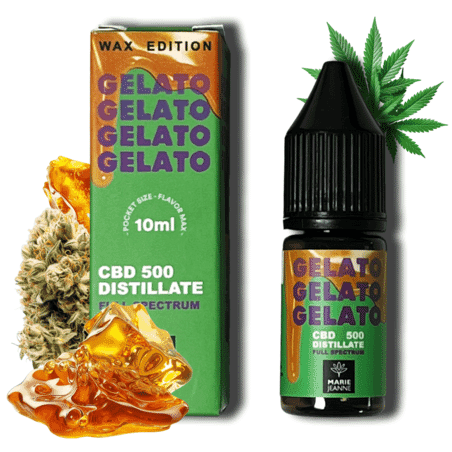
As the hemp-derived cannabinoid market matures, product quality and ingredient transparency have become more important than ever. Behind many of today’s CBD oils, edibles, topicals, and vape products lies one key ingredient: full spectrum CBD distillate.
For brands and manufacturers, understanding this extract — how it’s made, how it differs from other CBD forms, and why it’s widely used — is essential for building compliant, high-quality products.
Here’s a closer look at what full spectrum CBD distillate is and why it plays such a central role in modern hemp formulation.
What Is Full Spectrum CBD Distillate?
Full spectrum CBD distillate is a refined hemp extract that contains a range of naturally occurring cannabinoids, including cannabidiol (CBD), along with minor cannabinoids and trace amounts of THC within legal limits.
Unlike CBD isolate — which is purified down to nearly 100% cannabidiol — full spectrum distillate preserves multiple compounds from the hemp plant. These often include:
- CBD (cannabidiol)
- CBG (cannabigerol)
- CBN (cannabinol)
- CBC (cannabichromene)
- Trace THC (within compliant thresholds)
- Other plant compounds depending on processing
The term “distillate” refers to the refinement method used to concentrate cannabinoids and remove unwanted materials such as chlorophyll, fats, waxes, and residual solvents.
The result is a thick, viscous oil — typically amber or golden in color — that can be used across a wide range of product applications.
How Full Spectrum Distillate Is Produced
Producing high-quality distillate requires multiple stages of refinement.
1. Extraction
The process begins by extracting cannabinoids from hemp biomass. Common extraction methods include CO₂ extraction and ethanol extraction. These techniques separate cannabinoids and other desirable compounds from plant material.
2. Winterization
Winterization removes plant lipids and waxes to improve clarity and purity. This step enhances stability and texture.
3. Decarboxylation
Raw hemp contains cannabinoids in acidic forms (such as CBDA). Controlled heating converts these into their active forms (CBD), making them more suitable for finished products.
4. Distillation
Using advanced short-path or wiped-film distillation techniques, the extract is further refined. Cannabinoids are separated and concentrated based on boiling points, resulting in a clean, high-potency oil.
The goal is to maintain a broad cannabinoid profile while ensuring compliance with legal THC limits.
What Does “Full Spectrum” Really Mean?
In the hemp industry, “full spectrum” typically indicates that multiple cannabinoids remain present in the extract rather than isolating a single compound.
Importantly, full spectrum products contain trace amounts of THC within legal limits (such as less than 0.3% Delta-9 THC in the United States, depending on jurisdiction). This distinguishes full spectrum distillate from:
- Broad spectrum, which includes multiple cannabinoids but removes detectable THC
- Isolate, which contains only CBD
Manufacturers choose between these formats based on product positioning, regulatory requirements, and target markets.
Why Full Spectrum Distillate Is Popular in Product Manufacturing
Full spectrum CBD distillate has become a foundational ingredient for several reasons.
Versatility Across Product Types
Distillate can be incorporated into:
- Sublingual tinctures
- Gummies and edibles
- Capsules and softgels
- Topical creams and balms
- Vape cartridges
- Beverage infusions
Because it is concentrated, manufacturers can adjust dosing levels precisely.
Broad Cannabinoid Content
Many brands prefer full spectrum extracts due to the presence of multiple cannabinoids rather than CBD alone. As consumer education grows, labels highlighting “full spectrum” often resonate with buyers looking for comprehensive hemp formulations.
Consistency for Scaling
For businesses operating at scale, batch consistency is critical. Distillate allows for predictable cannabinoid percentages, which simplifies formulation and labeling.
This consistency is particularly important for:
- Private label brands
- White-label manufacturers
- Large retail chains
- Online CBD companies
Compliance and Safety Considerations
Because full spectrum distillate includes trace THC, proper documentation is essential.
Before purchasing or formulating, businesses should always request third-party lab testing that confirms:
- Cannabinoid potency breakdown
- THC compliance levels
- Residual solvent analysis
- Heavy metal testing
- Pesticide screening
- Microbial safety
Certificates of Analysis (COAs) from accredited laboratories provide transparency and legal protection.
Regulations vary by state and country, so manufacturers must verify that distillate aligns with applicable laws in their distribution regions.
Storage and Stability
Full spectrum distillate should be stored properly to maintain quality and potency.
Best practices include:
- Airtight containers
- Cool, stable temperatures
- Minimal exposure to light
- Limited oxygen contact
When stored correctly, distillate remains stable for extended periods, making it suitable for bulk purchasing and long-term production planning.
Market Trends Driving Demand
Several industry trends have increased interest in full spectrum CBD distillate:
Growth of Private Label Brands
Entrepreneurs entering the hemp space often rely on bulk distillate for product creation.
Expanding Product Categories
From beverages to skincare, new applications require versatile cannabinoid bases.
Increased Consumer Awareness
Shoppers now expect transparent labeling and cannabinoid breakdowns.
Emphasis on Professional Manufacturing
The hemp industry has shifted toward standardized, quality-controlled production models.
These factors have positioned full spectrum distillate as a preferred ingredient for forward-thinking brands.
Full Spectrum vs. Other Extract Types
To summarize:
- Full Spectrum: Multiple cannabinoids, including trace THC within legal limits.
- Broad Spectrum: Multiple cannabinoids, typically with THC removed.
- Isolate: Pure CBD only.
Each serves a distinct purpose depending on regulatory needs and product goals.
Final Thoughts
Full spectrum CBD distillate remains one of the most widely used ingredients in hemp-derived product development. Its refined yet comprehensive cannabinoid profile, scalability, and formulation flexibility make it a valuable resource for manufacturers and brands alike.
However, quality sourcing, transparent testing, and regulatory compliance are essential. As the market becomes more competitive and consumer expectations rise, businesses that prioritize responsible manufacturing practices will stand out.
In today’s evolving hemp landscape, full spectrum CBD distillate represents both opportunity and accountability — offering innovation potential while requiring disciplined quality control.

Leave a Reply